John Sackville
- Religion & Philosophy
Read by: John Sackville
Duration: 12 hrs
For Christians, Jesus of Nazareth is the Son of God, who died for the sins of the world, and who rose from the dead in triumph over sin and death. For non-Christians, he is almost anything else - a myth, a political revolutionary, a prophet whose teaching was misunderstood or distorted by his followers.
Jesus of Nazareth is the Son of God, and no myth, revolutionary, or misunderstood prophet, insists Benedict XVI. He thinks that the best of historical scholarship, while it can't "prove" Jesus is the Son of God, certainly doesn't disprove it. Indeed, Benedict maintains that the evidence, fairly considered, brings us face-to-face with the challenge of Jesus - a real man who taught and acted in ways that were tantamount to claims of divine authority, claims not easily dismissed as lunacy or deception.
- Travel - British Isles
Read by: John Sackville
Duration: 7 hrs 59 mins
Hidden in the names of English towns and villages, in copses, fields, lanes and hills, are the ghostly traces of birds conjuring powerful identities for people in ancient landscapes. What are their stories and secrets? How did people encounter birds over a thousand years ago?
In The Cuckoo's Lea, Michael J. Warren sets out on the trail of these ghosts. Captivated and guided by the secrets of place names, he finds their stories entangled with his own explorations of places through birds all across England. The past is hauntingly and movingly present on timeless marshes where curlews cry, where goshawks are breeding again for the first time in centuries, through silent cuckoo-woods lost under concrete sprawl, in the winter roosts of corvids and an owl village that vanished centuries ago.
- Religion & Philosophy
Read by: John Sackville
Duration: 1 hr 29 mins
In this enlightening series, world-renowned spiritual leader Thich Nhat Hanh shares the foundations of mindfulness practice and meditation.
By applying considered breath and meditation, How to Smile acts as a guide to show us how to transform hurt into healing, while also allowing us to explore the strong emotions of anger, sadness, regret and fear.
This is the essential guide to help you heal.
- Religion & Philosophy
Read by: John Sackville
Duration: 4 hrs 18 mins
This book examines six facets of Christian remembrance, complementing biblical exegesis with readings from literature, ancient and modern. It aims to be an essay in theology. At the same time, it proposes a grounded reflection on what it means to be a human being.
- Religion & Philosophy
Read by: John Sackville
Duration: 4 hrs 51 mins
The word 'chastity', at first sight, may seem intimidating, something to be dismissed out of hand. It is, however, something very different to celibacy.
At a time when religion is in decline in the Western world and when it often seems that the senses have run riot, Erik Varden shows that chastity, the single minded direction of the senses, is a loveable quality and one that affects and beautifies humankind.
The terms sexuality and wholeness indicate that to be sexual is to exist in a state of incompleteness longing to be restored. Wholeness points to a healing embrace that we desire so greatly. In Biblical language, chastity is a function of simplicity of sight. We are no longer torn apart by our passions and our desires, indeed they may reach their fulfilment. Body and spirit, male and female, order and disorder, passion and death can move from creative tension to a new kind of wholeness.
- Biography - Royals
Read by: John Sackville
Duration: 3 hrs 30 mins
The tragedy of Charles I dominates one of the most strange and painful periods in British history as the whole island tore itself apart over a deadly, entangled series of religious and political disputes. In Mark Kishlansky's brilliant account it is never in doubt that Charles created his own catastrophe, but he was nonetheless opposed by men with far fewer scruples and less consistency who for often quite contradictory reasons conspired to destroy him. This is a remarkable portrait of one of the most talented, thoughtful, loyal, moral, artistically alert and yet, somehow, disastrous of all this country's rulers.
- Psychology & Sociology
Read by: John Sackville
Duration: 13 hrs 32 mins
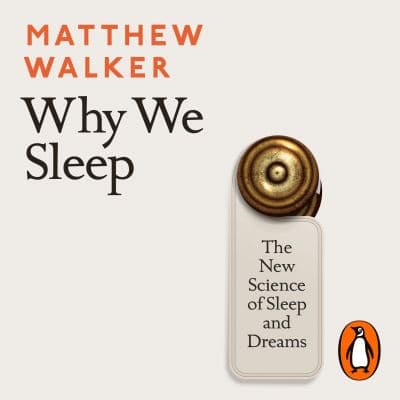
Sleep is one of the most important aspects of our life, health and longevity and yet it is increasingly neglected in twenty-first-century society, with devastating consequences: every major disease in the developed world - Alzheimer's, cancer, obesity, diabetes - has very strong causal links to deficient sleep.
In this audiobook, the first of its kind written by a scientific expert, Professor Matthew Walker explores twenty years of cutting-edge research to solve the mystery of why sleep matters. Looking at creatures from across the animal kingdom as well as major human studies, Why We Sleep delves into everything from what really happens during REM sleep to how caffeine and alcohol affect sleep and why our sleep patterns change across a lifetime, transforming our appreciation of the extraordinary phenomenon that safeguards our existence.
- Science - Earth & Physical
Read by: John Sackville
Duration: 7 hrs 18 mins
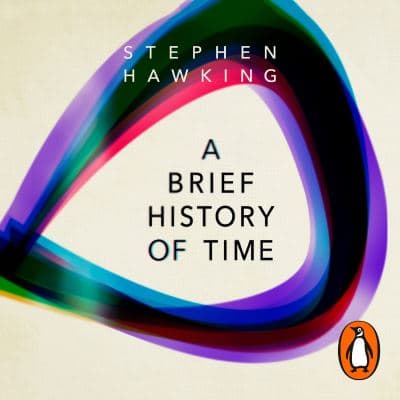
Was there a beginning of time? Could time run backwards? Is the universe infinite or does it have boundaries?
These are just some of the questions considered in the internationally acclaimed masterpiece by the world renowned physicist - generally considered to have been one of the world's greatest thinkers.
It begins by reviewing the great theories of the cosmos from Newton to Einstein, before delving into the secrets which still lie at the heart of space and time, from the Big Bang to black holes, via spiral galaxies and strong theory. To this day A Brief History of Time remains a staple of the scientific canon, and its succinct and clear language continues to introduce millions to the universe and its wonders.
- History - European
Read by: John Sackville
Duration: 9 hrs 59 mins
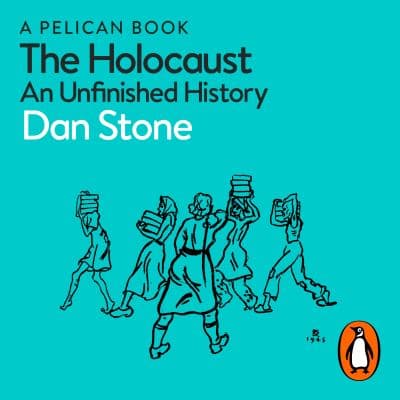
The Holocaust is much-discussed, much-memorialized and much-portrayed. But there are major aspects of its history that have been overlooked.
Spanning the entirety of the Holocaust and across the world, this sweeping history deepens our understanding. Dan Stone reveals how the idea of 'industrial murder' is incomplete: many were killed where they lived in the most brutal of ways. He outlines the depth of collaboration across Europe, arguing persuasively that we need to stop thinking of the Holocaust as an exclusively German project. He also considers the nature of trauma the Holocaust engendered, and why Jewish suffering has yet to be fully reckoned with. And he makes clear that the kernel to understanding Nazi thinking and action is genocidal ideology, providing a deep analysis of its origins.
- Contemporary Fiction
Read by: John Sackville
Duration: 13 hrs 48 mins
Series: BeartownBook 2
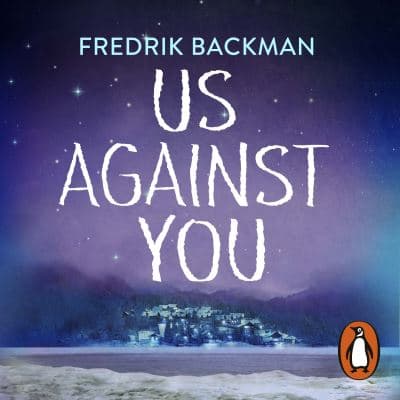
A small, broken town sits on the edge of a frozen lake surrounded by a forest, its wounds still raw from a tragedy that tore its fragile community in two.
Beartown has lost its way. Now the cold and dark that surround the snowbound town creep in, and so do new conflicts and tensions. What was once a friendly rivalry with the neighbouring town is beginning to turn sinister and Beartown braces itself for another tragic blow.
How far will the people of Beartown go to preserve their reputations for a second, deadly time?
Book 2 in the Beartown series.
- Detective & Mystery Stories
Read by: John Sackville
Duration: 10 hrs 19 mins
Series: Exmoor TrilogyBook 2
Shipcott is a close knit community where no stranger goes unnoticed. So when an elderly woman is murdered in her bed, village policeman Jonas Holly is doubly shocked. But Jonas finds himself sidelined as the investigation is snatched away from him by a senior detective. But this isn't the end of it for Jonas, because someone in the village is taunting him, blaming him for the tragedy, and watching every move he makes...
- Detective & Mystery Stories
Read by: John Sackville
Duration: 11 hrs 43 mins
Series: Exmoor TrilogyBook 3
Across Exmoor, children are being stolen from cars. There are no explanations, no ransom demands... and no hope. Policeman Jonas Holly faces a precarious journey into the warped mind of the kidnapper if he's to stand any chance of catching him.
- Biography - General
Read by: John Sackville
Duration: 14 hrs 20 mins
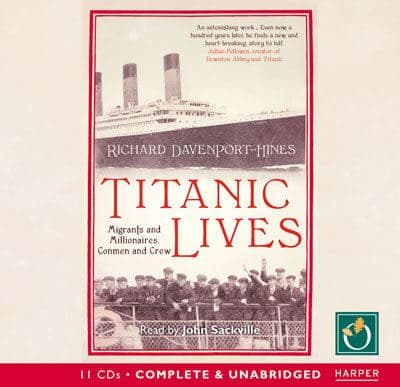
The author views the Titanic as a paradigm of Edwardian society. At the bottom of the ship was the steerage class, filled with emigrants hoping for a better life in the New World. Above them were the second class citizens bouyed-up by their prosperous respectability. And on the upper decks were the rich.
- Historical Mystery
Read by: John Sackville
Duration: 6 hrs
Tom Nash has rebuilt his life after a turbulent career in the Secret Intelligence Service. His past, though, is less willing to leave him behind. When a midnight intruder tries to kill him, Tom knows it is just a matter of time before another assassination attempt is made.
- Religion & Philosophy
Read by: John Sackville
Duration: 8 hrs
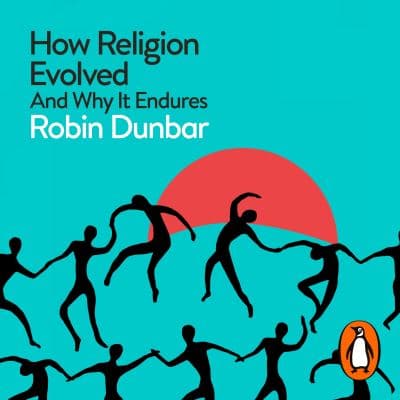
Religion is both unique - as far as we can judge - and universal to humans. Our species diverged from the great apes about six to eight million years ago and since then, along with language, our propensity towards spiritual thinking and ritual emerged. How, when and why did this occur, and how did the earliest, informal shamanic practices evolve into the world religions familiar to us today? What is the evolutionary purpose of religion, and are some individuals more inclined than others to be religious?
Robin Dunbar, Professor of Evolutionary Psychology at the University of Oxford, explores these and other key questions, mining the distinctions between religions of experience - as practised by hunter-gatherer societies since the earliest human history - and doctrinal religions, from Judaism, Christianity and Islam to Zoroastrianism, Hinduism, Buddhism and their many derivatives. Examining religion's origins, social function, the effects of religious practice or feeling on the brain and body, and its place in the modern era, How Religion Evolved offers a fascinating and far-reaching analysis of this quintessentially human impulse - to believe. - Grief & Bereavement
Read by: John Sackville
Duration: 2 hrs 30 mins
In the immediate aftermath of a loss, sometimes it is all we can do to keep breathing. With his signature clarity and compassion, Thich Nhat Hanh will guide you through the storm of emotions surrounding the death of a loved one.
How To Live When A Loved One Dies offers powerful practices such as mindful breathing that will help you reconcile with death and loss, feel connected to your loved one long after they have gone and transform your grief into healing and joy. - Thrillers
Read by: John Sackville
Duration: 13 hrs
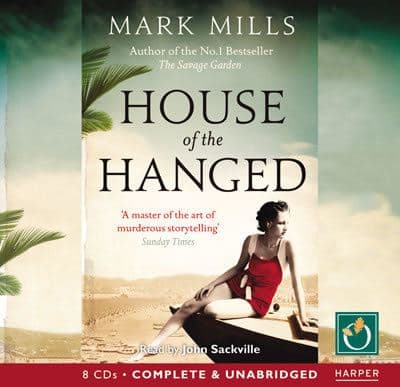
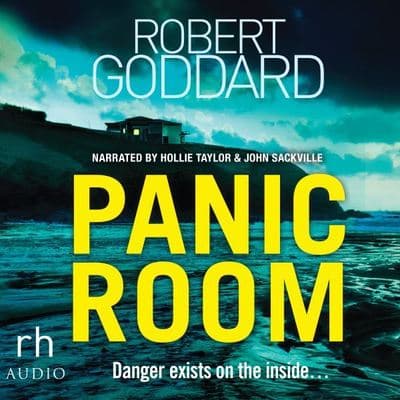
High on a Cornish cliff, Blake, a young woman of mysterious background, is acting as housesitter in a vast uninhabited mansion. The house has a panic room. Cunningly concealed, even Blake doesn’t know it’s there. But her remote existence is going to be invaded when people come looking for the house’s owner, missing rogue entrepreneur, Jack Harkness, and Blake is asked the sort of questions she can’t – or won’t – want to answer...
- Biography - Historical to 1945
Read by: John Sackville
Duration: 11 hrs 45 mins
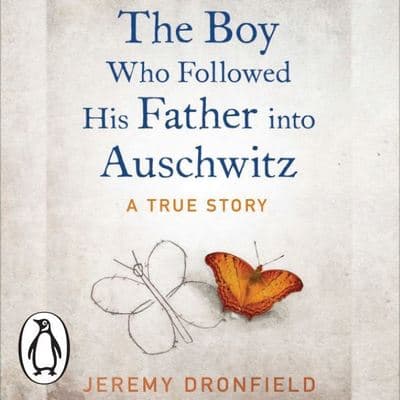
In 1939, Gustav Kleinmann, a Jewish upholsterer in Vienna, was seized by the Nazis, along with his teenage son Fritz. When Gustav was set to be transferred to Auschwitz, a certain death sentence, Fritz refused to leave his side. Based on Gustav's secret diary and meticulous archive research, this book tells his and Fritz's story for the first time - a story of courage and survival unparalleled in the history of the Holocaust.
- Biography - Art Music & Literature
Read by: John Sackville
Duration: 17 hrs 45 mins
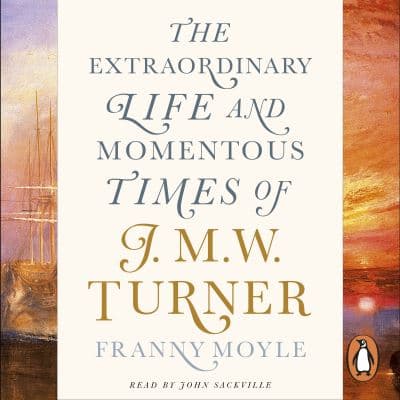
J M W Turner is Britain's most famous landscape painter. Yet beyond his artistic achievements, little is known of the man himself and the events of his life. Franny Moyle tells the story of the man who was considered visionary at best and ludicrous at worst, a near mythical figure in his own lifetime. A resolute adventurer, he found new ways of revealing Britain to the British, astounding his audience with his invention and intelligence.
- Health & Well-being
Read by: John Sackville
Duration: 8 hrs 30 mins
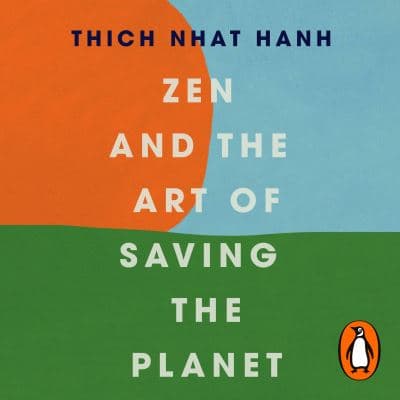
In this masterful work, one of the most revered spiritual leaders in the world today shares his wisdom on how to be the change we want to see in the world.
In these troubling times we all yearn for a better world. But many of us feel powerless and uncertain what we can do. Thich Nhat Hanh (Thay) is blazingly clear: there's one thing that we have the power to change-and which can make all the difference: our mind. How we see and think about things determines all the choices we make, the everyday actions we take (or avoid), how we relate to those we love (or oppose), and how we react in a crisis or when things don't go our way.
Filled with powerful examples of engaged action he himself has undertaken, inspiring Buddhist parables, and accessible daily meditations, this powerful spiritual guide offers us a path forward, opening us to the possibilities of change and how we can contribute to the collective awakening and environmental revolution our fractured world so desperately needs. - Biography - General
Read by: John Sackville
Duration: 8 hrs 4 mins
In 1975, as a child, Richard Beard was sent away from his home to sleep in a dormitory. So were David Cameron and Boris Johnson.
In those days a private boys' boarding school education was largely the same experience as it had been for generations: a training for the challenges of Empire. He didn't enjoy it. But the first and most important lesson was to not let that show. Being separated from the people who love you is traumatic. How did that feel at the time, and what sort of adult does it mould?
This is a story about England, and a portrait of a type of boy, trained to lead, who becomes a certain type of man. As clearly as an X-ray, it reveals the make-up of those who seek power - what makes them tick, and why.
- History - European
Read by: John Sackville
Duration: 13 hrs 36 mins
Homelands is a stunning blend of contemporary history reportage and memoir by our greatest writer about European affairs. Drawing on half a century of interviews and experience Homelands tells the story of Europe in the later twentieth and early twenty-first centuries - how having emerged from its wartime hell in 1945 it slowly recovered and rebuilt liberated and united to come close to the ideal of a Europe 'whole free and at peace'. And then faltered. Humane expert and deeply felt Homelands is full of encounters conversations and anecdote.
It is also highly personal: Timothy Garton Ash has spent a lifetime studying and thinking about Europe and this book is full of life itself from his father's experience on D-Day to his teenage French exchange to interviewing Polish dockers Albanian guerillas and angry teenagers in the poorest quarters of Paris as well as advising prime ministers chancellors and presidents in the UK Europe and the US. Homelands is both a singular history of a period of unprecedented progress and a clear-eyed account of how so much then went wrong all the way from the financial crisis of 2008 to the war in Ukraine. It culminates in an urgent call to the citizens of this great old continent to understand and defend what we have collectively achieved.
- Science - Environmental
Read by: John Sackville
Duration: 9 hrs 29 mins
Our modern-day cities might seem to represent our separation from the natural world. In fact as Ben Wilson reveals in this captivating re-examination of urban landscapes around the world nature has always been at the heart of the city. Wilson explores the wild side of cities past present and future: the middens abandoned sites and strips of land alongside railway lines. For much of history wild patches in cities provided essential food fuel medicine and places of recreation and escape for city-dwellers and the dividing line between city and countryside was blurred.
Even our post-industrial cities are much wilder places that we might imagine with booming animal and plant populations if we know where to look. In today's urbanised planet natural forces - be they floods storms droughts or pandemics - look set to determine the future of our cities. In a time of climate crisis cities that once built walls and towers to defend against attack; now they have to become greener to protect themselves from external threats. Our future - and that of the planet - will be made in the city. Only by looking deep in to the past examining the present and casting an eye to the future can we really begin to understand the bountiful potential and wonder of our extraordinary urban ecosystems.
- Science - Biological
Read by: John Sackville
Duration: 9 hrs 51 mins
We are a wonder of evolution. Powerful yet dextrous, instinctive yet thoughtful, we are expert communicators and innovators. Our exceptional abilities have created the civilisation we know today. But we're also deeply flawed. Our bodies break, choke and fail, whether we're kings or peasants. Diseases thwart our boldest plans. Our psychological biases have been at the root of terrible decisions in both war and peacetime. This extraordinary contradiction is the essence of what it means to be human - the sum total of our frailties and our faculties.
And history has played out in the balance between them. Now, for the first time, Lewis Dartnell tells our story through the lens of this unique, capricious and fragile nature. He explores how our biology has shaped our relationships, our societies, our economies and our wars, and how it continues to challenge and define our progress. Being Human is history made flesh. It will change the way you see the world.
- History - General
Read by: John Sackville
Duration: 6 hrs 14 mins
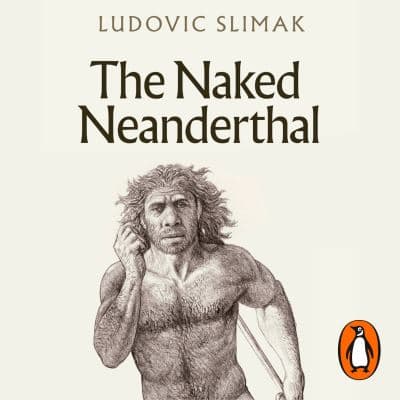
What do we really know about our cousins, the Neanderthals? For over a century we saw Neanderthals as inferior to Homo Sapiens. After new discoveries, the pendulum swung the other way and they are generally seen as our relatives: not quite human, but similar enough, and still not equal. Now, thanks to an ongoing revolution in palaeoanthropology in which he has played a key part, Ludovic Slimak shows us that they are something altogether different - and they should be understood on their own terms rather than by comparing them to ourselves. As he reveals in this stunning book, the Neanderthals had their own history, their own rituals, their own customs. Their own intelligence, very different from ours.
Ludovic Slimak has travelled around the world for the past thirty years to uncover who the Neanderthals really were. A modern-day Indiana Jones, he takes us on a fascinating archaeological investigation: from the Arctic Circle to the deep Mediterranean forests, he traces the steps of these enigmatic creatures, working to decipher their real stories through every single detail they left behind. A thought-provoking adventure story, written with wit and verve, The Naked Neanderthal shifts our understanding of deep history -- and in the process reveals just how much we have yet to learn. - Science - Biological
Read by: John Sackville
Duration: 9 hrs 4 mins
50,000 years ago, we were not the only species of human in the world. There were at least four others, including the Neanderthals, Homo floresiensis, Homo luzonesis and the Denisovans. At the forefront of the latter's ground-breaking discovery was Oxford Professor Tom Higham. In The World Before Us, he explains the scientific and technological advancements - in radiocarbon dating and ancient DNA, for example - that allowed each of these discoveries to be made, enabling us to be more accurate in our predictions about not just how long ago these other humans lived, but how they lived, interacted and live on in our genes today. This is the story of us, told for the first time with its full cast of characters.
- Psychology & Sociology
Read by: John Sackville
Duration: 3 hrs 49 mins
We live in a world in which we are invited to change - to become our best selves, through politics, or fitness, or diet, or therapy. We change all the time - growing older and older - and how we think about change changes over time too. We want to think of our lives as progress myths - as narratives of positive personal growth - at the same time as we inevitably age and suffer setbacks. So there are the stories we tell about change, and there are the changes we actually make - and they don't always go, or come, together . . . This sparkling book is about that fact.
- Economics Politics & Current Affairs
Read by: John Sackville
Duration: 12 hrs 4 mins
The modern world is built on commodities - from the oil that fuels our cars to the metals that power our smartphones. We rarely stop to consider where they come from. But we should. In The World for Sale, two leading journalists lift the lid on one of the least scrutinised corners of the economy: the workings of the billionaire commodity traders who buy, hoard and sell the earth's resources. It is the story of how a handful of swashbuckling businessmen became indispensable cogs in global markets: enabling an enormous expansion in international trade, and connecting resource-rich countries - no matter how corrupt or war-torn - with the world's financial centres.
And it is the story of how some traders acquired untold political power, right under the noses of Western regulators and politicians - helping Saddam Hussein to sell his oil, fuelling the Libyan rebel army during the Arab Spring, and funnelling cash to Vladimir Putin's Kremlin in spite of strict sanctions. The result is an eye-opening tour through the wildest frontiers of the global economy, as well as a revelatory guide to how capitalism really works. - 20th Century Classics
Read by: John Sackville
Duration: 18 hrs 43 mins
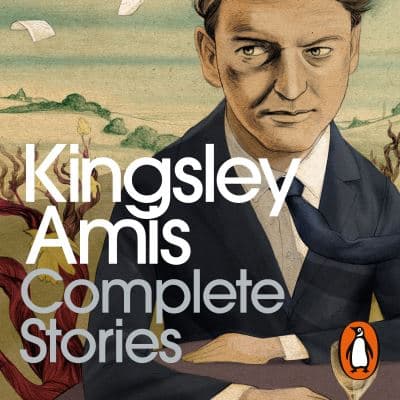
The short stories of Kingsley Amis - the great master of post-war comic prose - are dark, playful, moving, surprising and extremely funny. This definitive collection gathers all Amis's short fiction in a single volume for the first time and encompasses five decades of storytelling.
The collection spans many genres, offering ingenious alternative histories, mystery and horror, satirical reflections and a devilishly funny attacks. Amis's stories reveal the scope of his imagination and the warmth beneath his acerbic humour, and they all share the unmistakable style and wit of one of Britain's best loved writers.
- Arts General
Read by: John Sackville
Duration: 7 hrs 54 mins
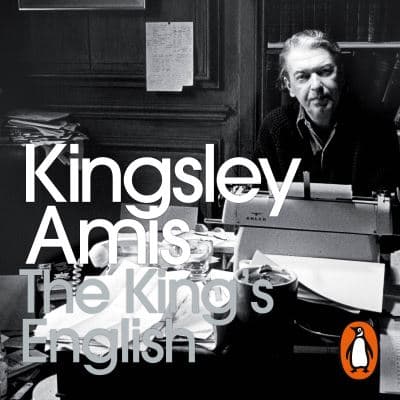
The King's English is Kingsley Amis's authoritative and witty guide to the use and abuse of the English language.
A scourge of illiteracy and a thorn in the side of pretension, Amis provides indispensable advice about the linguistic blunders and barbarities that lie in wait for us, from danglers, four-letter words to jargon and even Welsh rarebit. If you have ever wondered whether it's acceptable to start a sentence with 'and', to boldly split an infinitive, or to cross your sevens in the French style, Amis has the answer - or a trenchant opinion.
By turns reflective, acerbic and provocative, The King's English is for anyone who cares about how the English language is used.
- 20th Century Classics
Read by: John Sackville
Duration: 7 hrs 47 mins
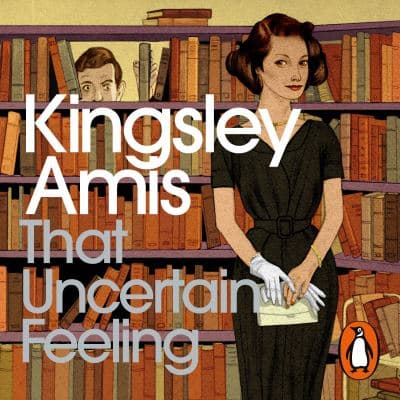
Competition is stiff for the position of sub-librarian in Aberdarcy Library. For John Lewis, the situation is complicated by the attentions of daunting and desirable village socialite, Elizabeth Gruffyd-Williams, who is married to a member of the local Council.
Pursuing an affair with her whilst keeping his job prospects alive is John's predicament, as he finds himself running down Welsh country lanes at midnight in a wig and dress, resisting the advances of local drunks and suffering the long speeches of a 'nut-faced' clergyman.
- 20th Century Classics
Read by: John Sackville
Duration: 8 hrs 52 mins
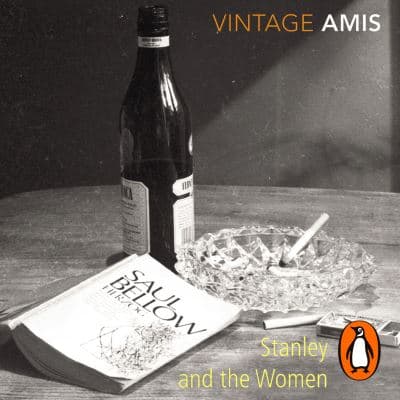
Just when Stanley Duke thinks it safe to sink into middle age, his son goes insane. As if that wasn't terrible enough, Stanley finds himself beset on all sides by women - neurotic, cantankerous, half-baked or just plain capricious. As one by one they gnaw away at his composure, Stanley wonders whether insanity is not something with which all women are intimately acquainted.
- Transport
Read by: John Sackville
Duration: 11 hrs 32 mins
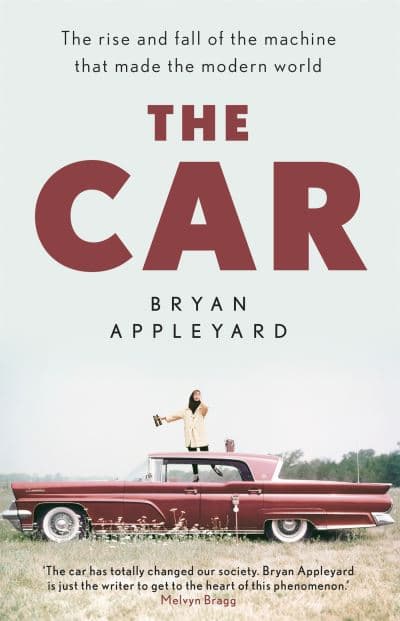
More than any other technology, cars have transformed our culture. Cars have created vast wealth as well as novel dreams of freedom and mobility. They have transformed our sense of distance and made the world infinitely more available to our eyes and our imaginations. They have inspired cinema, music and literature; they have, by their need for roads, bridges, filling stations, huge factories and global supply chains, re-engineered the world. Almost everything we now need, want, imagine or aspire to assumes the existence of cars in all their limitless power and their complex systems of meanings.
This book celebrates the immense drama and beauty of the car. As the age of the car as we know it comes to an end, Bryan Appleyard's brilliantly insightful book tells the story of the rise and fall of the incredible machine that made the modern world what it is today.
- Contemporary Fiction
Read by: John Sackville
Duration: 11 hrs
One winter morning, Lorimer Black - young, good-looking, but with a somewhat troubled expression - goes to keep a perfectly routine business appointment and finds a hanged man. A bad start to the day, by anyone's standards, and an ominous portent. For Lorimer works in the only-slightly corrupt business of financial adjusting, and he is about to learn that it is much uglier - and even more crooked - than he ever imagined. Suddenly, he's being unfairly blamed for all kinds of irregularities. Next, his life is threatened. And, lastly, he's coming to realise that the life he has led till now - the one someone wants to rub out - is one big fat lie...
- Biography - Historical to 1945
Read by: John Sackville
Duration: 18 hrs 16 mins
This compelling book on Hitler and Stalin - the culmination of thirty years' work - examines the two tyrants during the Second World War, when Germany and the Soviet Union fought the biggest and bloodiest war in history. Yet despite the fact they were bitter opponents, Laurence Rees shows that Hitler and Stalin were, to a large extent, different sides of the same coin.
Using previously unpublished, startling eyewitness testimony from soldiers of the Red Army and Wehrmacht, civilians who suffered during the conflict and those who knew both men personally, bestselling historian Laurence Rees - probably the only person alive who has met Germans who worked for Hitler and Russians who worked for Stalin - challenges long-held popular misconceptions about two of the most important figures in history. This is a master work from one of our finest historians.
- History - Ancient
Read by: John Sackville
Duration: 11 hrs 10 mins
Jonathan Harris's classic text chronologically surveys Byzantine history in the time of the Crusades. The book reveals the attitudes of the Byzantine ruling elites towards the Crusades and their ultimate inability to adapt to the challenges this presented. Using evidence amassed in a wealth of primary sources, Harris successfully makes the point that Byzantine interactions with Western Europe, the Crusades and the crusader states is best understood in the nature of the Byzantine Empire and the ideology which underpinned it, rather than in any generalised hostility between the peoples.





- Previous<
- Page1
- Page2
- Next>