Anthony Tucker-Jones
- War - WW2
Read by: Richard Trinder
Duration: 10 hrs 28 mins
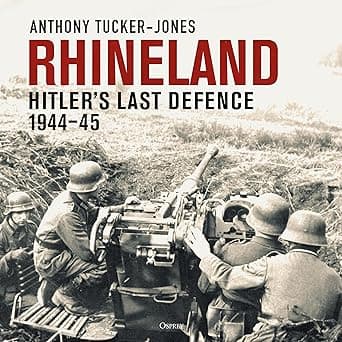
The Rhineland was where Adolf Hitler sowed the seeds for the Second World War when he remilitarized it in breach of the Treaty of Versailles in 1936, and by late 1944 the Rhine provided the last major obstacle to the advancing Allied armies that were threatening the Fatherland itself.
In this new history of this vital campaign, respected military historian Anthony Tucker-Jones describes the race against time as the Germans fought to stave off the inevitable. It was essential that the Germans held the west bank in order to protect the Rhine crossings at Cologne, Bonn, Koblenz and Remagen, but Hitler was intent on counter-attacking in the Ardennes in the winter of 1944 and this meant there was little left to bolster the defences of the Rhine.
- Biography - Political
Read by: Nick Biadon
Duration: 13 hrs 16 mins
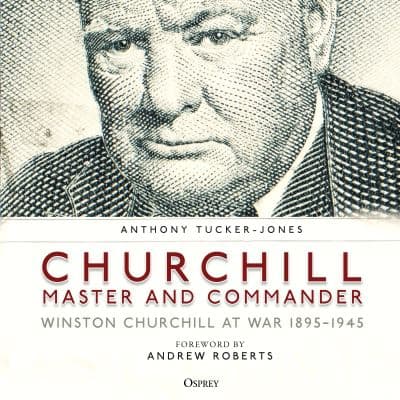
Today Winston Churchill is widely hailed as Britain's greatest wartime leader and politician. Deep down though, he was foremost a warlord. Just like his ally Stalin, and his arch enemies Hitler and Mussolini, Churchill could not help himself and insisted on personally directing the strategic conduct of World War II.
In this fascinating new book, acclaimed historian Anthony Tucker-Jones explores the record of Winston Churchill as a military commander, assessing how the military experiences of his formative years shaped him for the difficult military decisions he took in office. This book assesses his choices in the some of the most controversial and high-profile campaigns of World War II, and how in high office his decision making was both right and wrong.
- War - WW2
Read by: Roger May
Duration: 9 hrs 44 mins
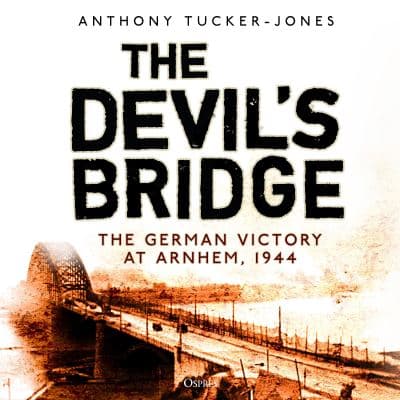
In the late summer of 1944, SS-Obergruppenführer Wilhelm 'Willi' Bittrich found himself in the Netherlands surveying his II SS Panzer Corps, which was in a poor state having narrowly escaped the defeat in Normandy. He was completely unaware that his command lay directly in the path of a major Allied thrust: the 17 September 1944 launch of the largest airborne and glider operation in the history of warfare.
Codenamed Operation Market Garden, it was intended to outflank the German West Wall and 'bounce' the Rhine at Arnhem, from where the Allies could strike into the Ruhr, Nazi Germany's industrial heartland.
This new book explores the operation from the perspective of the Germans as renowned historian Anthony Tucker-Jones examines how they were able to mobilise so swiftly and effectively in spite of depleted troops and limited intelligence.
- Previous<
- Page1
- Next>